research
Research interests, methods, and selected outputs.
research areas
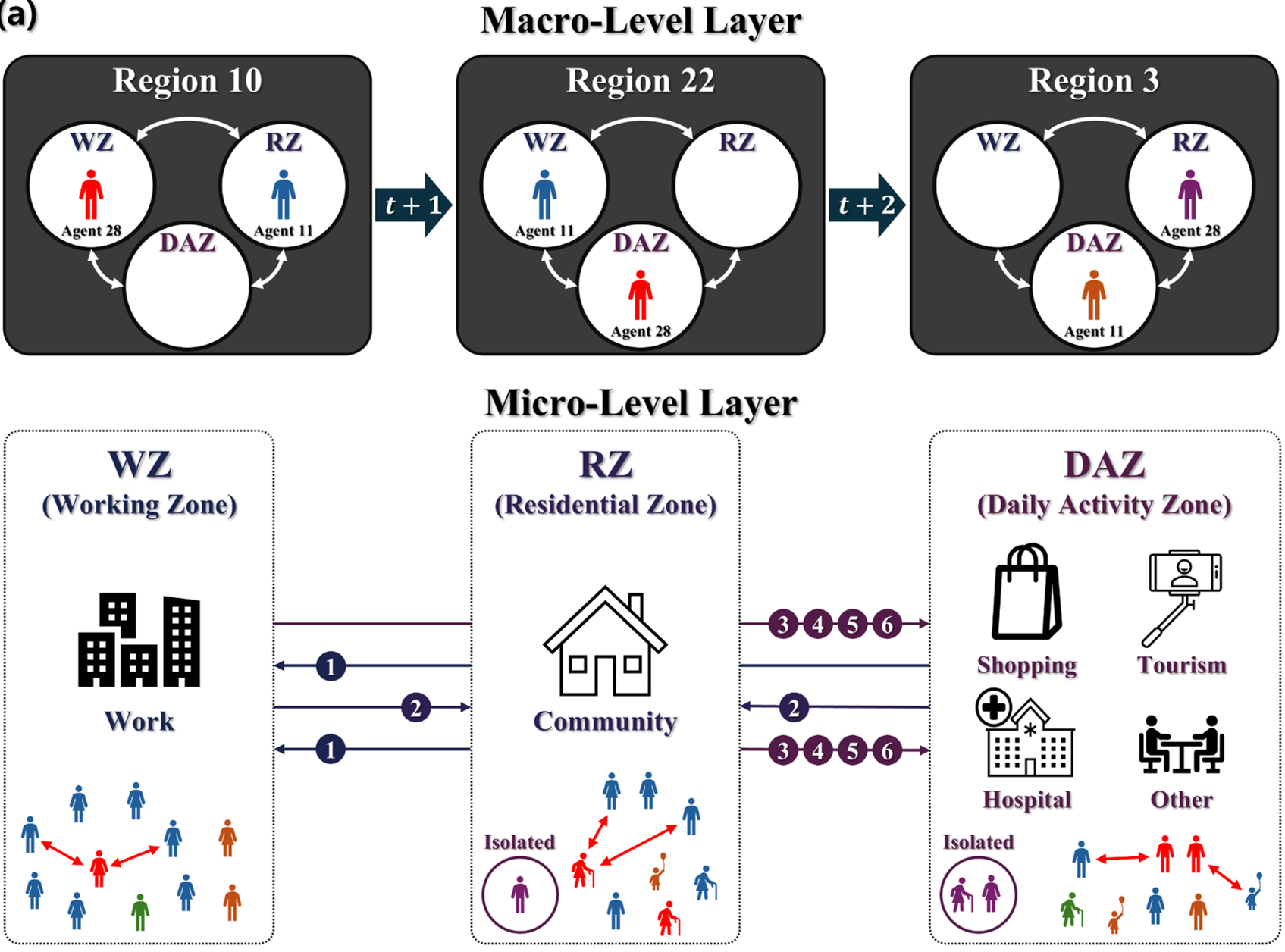
Simulation & Agent-based modeling
We develop agent-based models (ABMs) to test intervention strategies under realistic conditions, accounting for heterogeneity in age structure, contact patterns, and behavioral responses. This research produces uncertainty-aware policy recommendations.
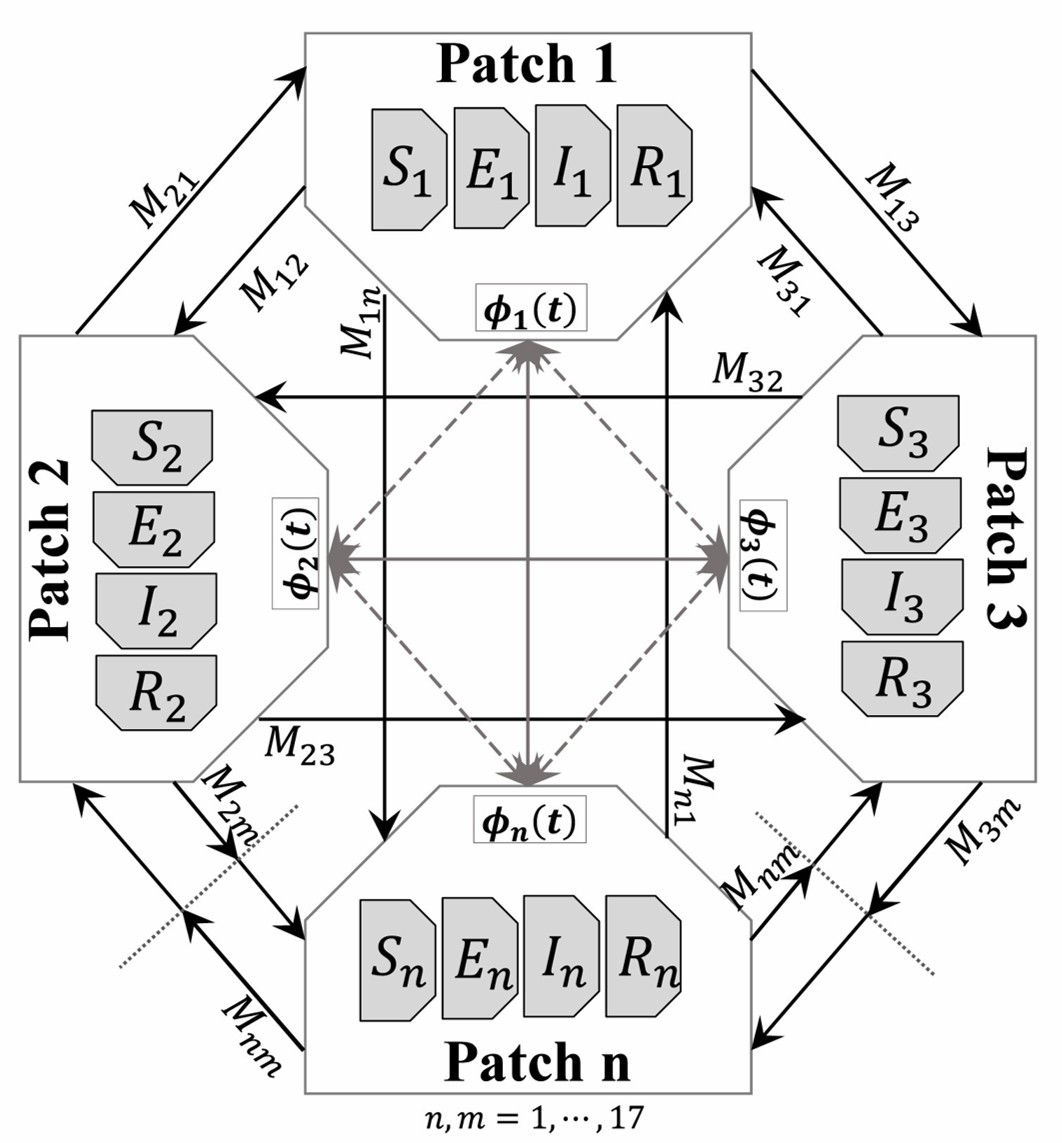
Multi-patch & Metapopulation Modeling
We develop spatially explicit models to capture disease dynamics across connected subpopulations, focusing on the role of human mobility and regional heterogeneity. By combining metapopulation equations with real mobility data, we study spatial spread, importation risks between regions. The outcomes include spatial risk index, impact analyses of mobility restrictions, and regional forecasts.
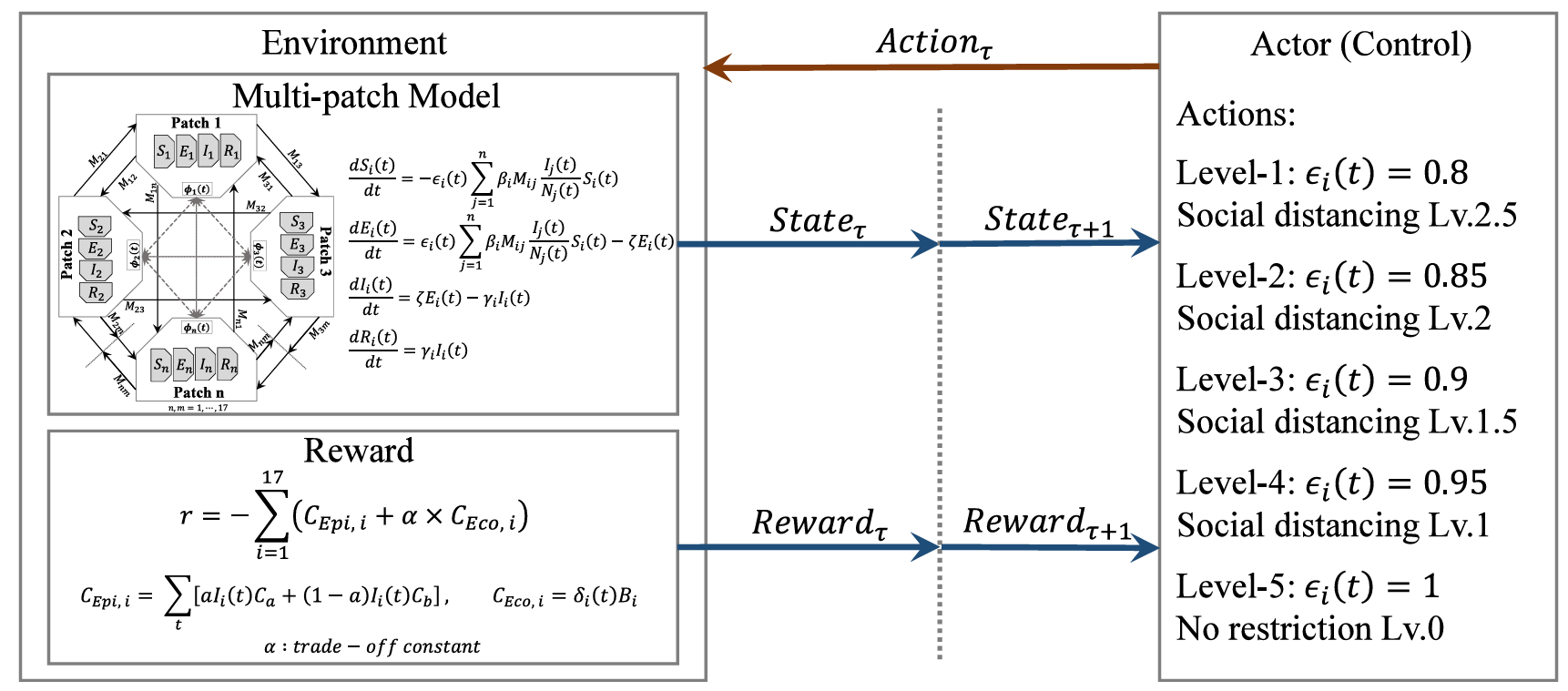
Reinforcement Learning
We leverage deep reinforcement learning to identify optimal control strategies, such as social distancing and vaccination, within stochastic epidemic environments. Utilizing Markov Decision Processes (MDP) and algorithms like PPO or DQN, this research focuses on adaptive intervention policies and multi-objective optimization (balancing health outcomes vs. cost). The results provide optimal policy schedules and Pareto frontier analyses for AI-driven decision support.
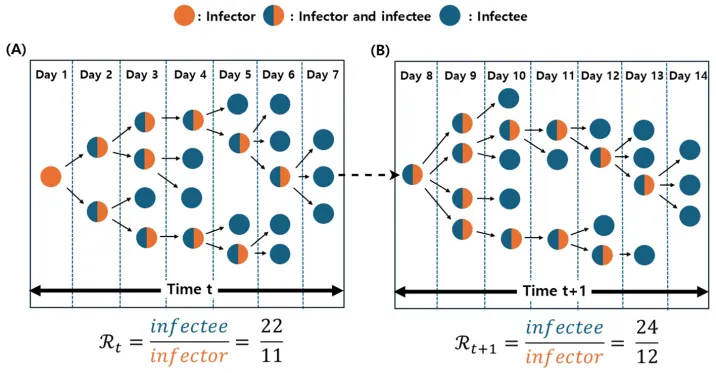
Reproduction Number Estimation
We utilize probabilistic frameworks to infer the time-varying effective reproduction number ($R_t$). We especially focus on the reproduction number refelcting heterogeneous mixing by infection network or mobility data. We also evaluate real-time transmissibility trends, NPI effectiveness, and superspreading events.